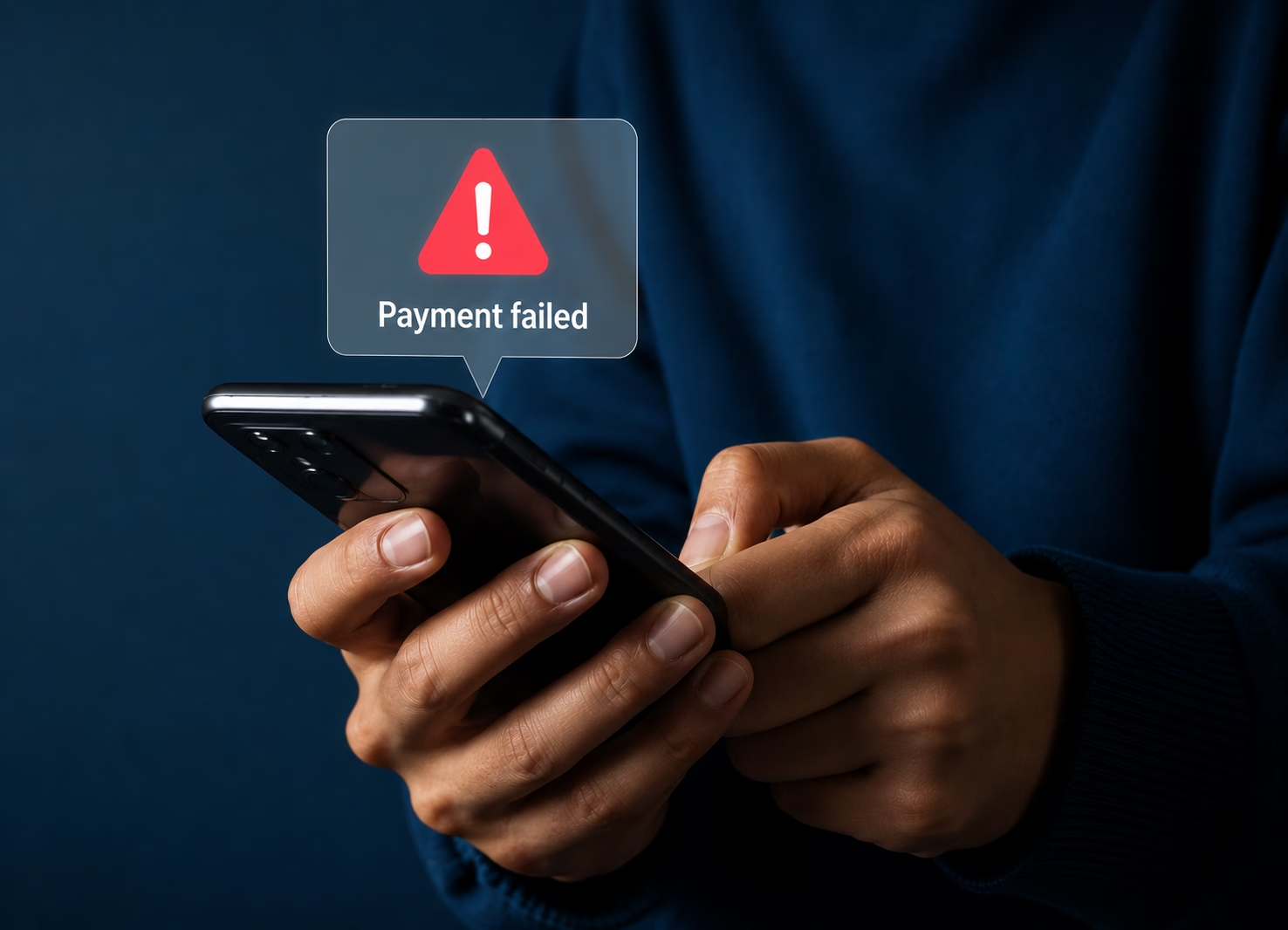
Many businesses still treat a failed payment as the end of a transaction. It usually isn’t.
A customer clicks “Pay.” The transaction fails. The customer tries again. Maybe once. Maybe twice. Sometimes not at all.
And that’s where businesses quietly lose revenue.
In the UAE’s rapidly digitizing commerce market, payment retries are no longer a backend technical detail. They directly affect conversion, customer trust, operational efficiency, and revenue recovery. The problem is that many businesses still treat retries as accidental behavior instead of a measurable commerce layer.
The hidden problem behind “payment failed”
Digital payments in the UAE are accelerating rapidly.
Around 80% of payments in the UAE are now digital, while mobile-led purchases continue to rise sharply. (Gulf News)
At the same time:
- More wallets are entering the ecosystem
- Cross-border transactions are increasing
- Payment methods are fragmenting
- Real-time payment expectations are growing
Which means payment environments are becoming more complex. And complexity increases failure points. A payment can fail for dozens of reasons:
- Temporary bank latency
- Expired cards
- Network routing issues
- Authentication interruptions
- Issuer declines
- Timeout errors
- Insufficient balances
- Customer verification drop-offs
The issue is not that payments fail. The issue is what happens next.
Most failed payments are not permanently lost
This is the part many businesses underestimate. A meaningful percentage of failed payments are recoverable.
Industry research consistently shows that retry logic, intelligent routing, and payment recovery flows can recover significant transaction value that would otherwise disappear as revenue leakage. (Worldline – E-commerce payment best practices)
EY’s global payments research also highlights how payment optimization and infrastructure resilience are becoming critical differentiators for businesses operating in increasingly digital economies. (EY – The Rise of PayTech)
In high-volume commerce businesses, even small failure rates compound quickly:
- retries increase support tickets
- customers abandon carts
- repeat attempts create friction
- businesses lose conversion visibility
And often, customers did intend to pay. The infrastructure simply failed to complete the transaction efficiently.
Businesses in the UAE are operating in a faster payments environment
The UAE’s payments ecosystem is evolving faster than many businesses realize. Platforms like Aani are accelerating expectations around instant transactions and real-time movement of money. (Gulf News – Aani growth)
Wallet adoption is expanding. QR payments are increasing. Cross-border acceptance is becoming more important. Consumers expect checkout experiences to feel immediate.
At the same time, payment infrastructure itself is becoming more localized and optimized. Visa’s move toward local dirham settlement in the UAE aims to make transactions faster and smoother domestically. (Gulf News – Visa local settlement). This changes customer expectations.
Customers increasingly assume:
- Retries should be seamless
- Payment recovery should be invisible
- Failed transactions should resolve quickly
When that does not happen, businesses absorb the impact:
- Lost sales
- Lower trust
- Operational inefficiencies
- Customer drop-offs
Payment retries are not just technical. They are operational.
Many businesses still think retries belong entirely to engineering or payments teams.
But retries affect:
- Revenue performance
- Conversion rates
- Customer experience
- Reconciliation complexity
- Support operations
One failed payment often creates downstream operational cost:
- Customer complaints
- Refund requests
- Duplicate payment confusion
- Abandoned purchases
- Support escalation
In high-frequency sectors like retail, food delivery, hospitality, travel, and e-commerce, these effects multiply rapidly. And as payment methods continue expanding across cards, wallets, QR, instant transfers, and alternative rails, retry intelligence becomes more important, not less.
The missed insight: retries are a revenue recovery layer
The strongest payment systems are no longer built only around authorization. They are built around recovery.
That includes:
- Smart retry timing
- Alternative routing
- Issuer optimization
- Failover infrastructure
- Transaction visibility
- Retry analytics
- Real-time monitoring
This is increasingly where modern payment performance is won. Not at the checkout page alone. But in what happens after a transaction fails.
What businesses should focus on now
Businesses should start asking:
- What percentage of our failed payments are recoverable?
- How many retries happen before abandonment?
- Where do retries fail most often?
- Which payment methods see the highest recovery rates?
- Are retries creating operational friction elsewhere?
- How visible is our payment recovery process internally?
Because in modern commerce, failed payments are not always lost revenue. Sometimes they are simply unrecovered revenue.
And in a market like the UAE, where digital payments infrastructure is evolving rapidly, the businesses that optimize recovery layers early will likely outperform those still treating payment failures as isolated incidents.



.avif)