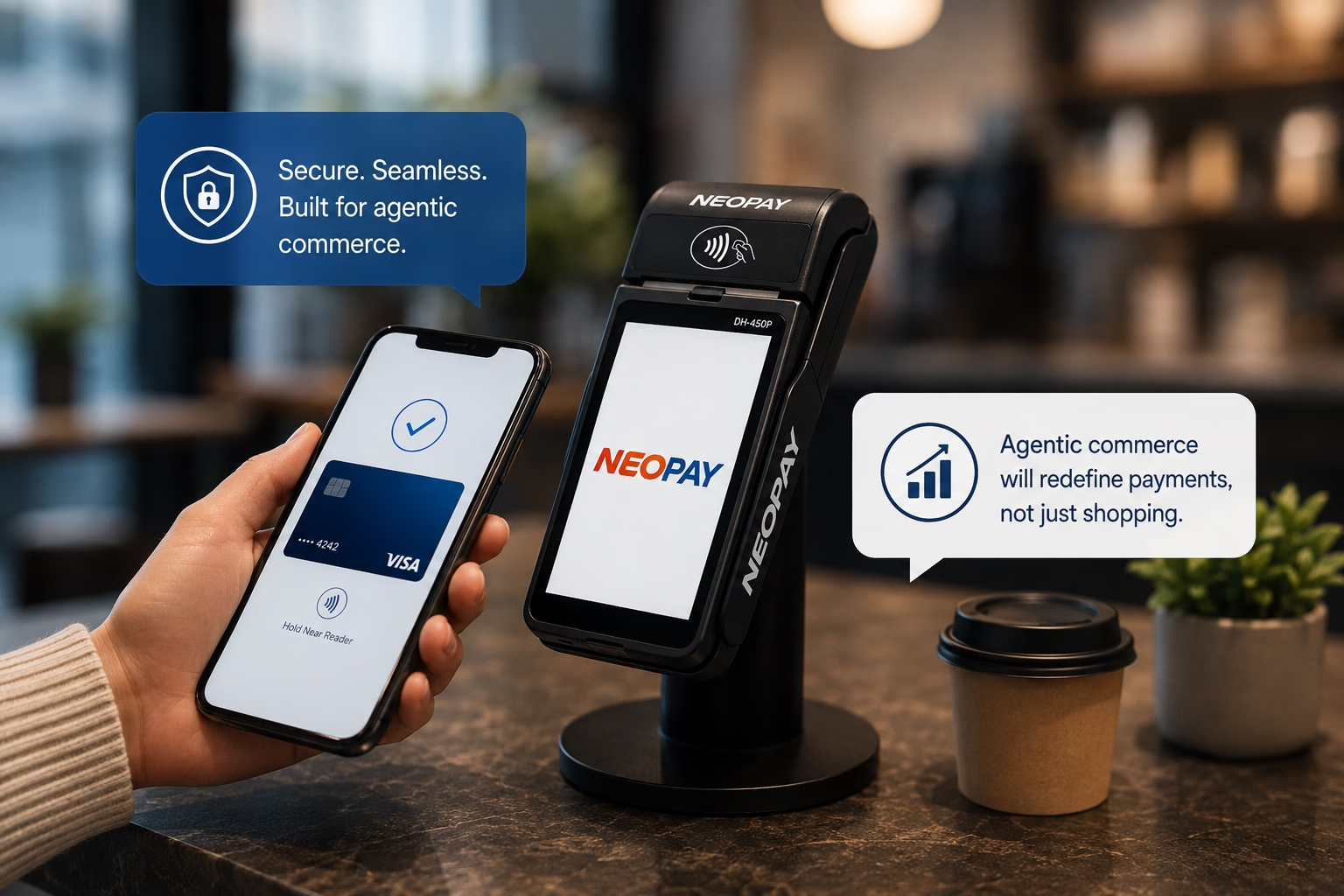
For years, businesses treated checkout abandonment as a design issue.
Too many steps. Poor mobile experience. Slow page loads. Complicated forms.
Fix the UX, reduce abandonment. But ecommerce has changed. Today, checkout abandonment is no longer just about interface design. It has become a payments, trust, and infrastructure problem.
Because customers are not abandoning carts only because the experience looks bad. They are abandoning because the buying journey feels slow, fragmented, repetitive, or uncertain. And in modern ecommerce, hesitation kills momentum fast.
Checkout friction is behavioral, not just visual
Traditional ecommerce journeys were built around process completion, not customer behavior. A customer browses products, compares options, adds items to cart, creates an account, enters shipping details, fills payment information, completes OTP verification, waits for authorization, and finally receives confirmation.
The journey became a sequence of interruptions.
Every additional click adds cognitive effort. Every form field creates friction. Every delay increases uncertainty.
Customers do not enjoy checkout flows. They tolerate them. And increasingly, tolerance is shrinking. Baymard Institute research continues to show that cart abandonment rates remain extremely high across ecommerce globally. (Baymard Institute).
Customers experience checkout emotionally
Most ecommerce teams optimize checkout analytically:
- page speed
- conversion funnels
- form completion
- button placements
Customers experience checkout psychologically. The moment payment begins, emotional sensitivity increases. Behavioral science shows that people become more risk-aware when money is involved. Which means even small interruptions create disproportionate anxiety.
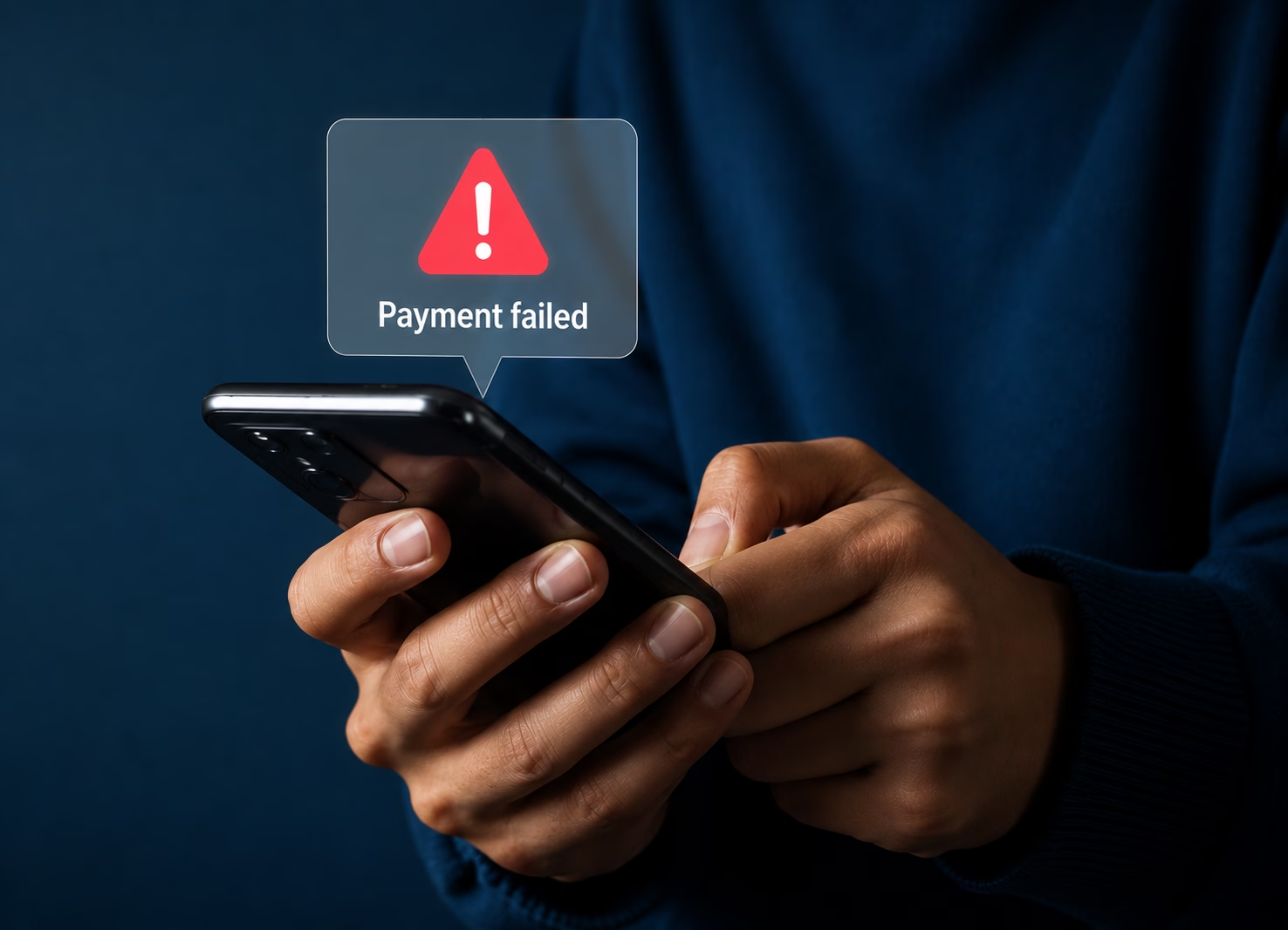
A loading screen that lasts too long. An OTP delay. An unclear transaction status.
These moments create uncertainty instantly. Customers begin wondering: “Did my payment go through?” “Should I retry?” “Did I get charged twice?”
The checkout may still work technically. But psychologically, trust has already weakened. Research around digital trust consistently shows that friction and ambiguity increase abandonment behavior in online commerce. (World Bank – Behavioral Science for Digital Payments)
Ecommerce expectations have changed faster than checkout systems
Customers today are conditioned by:
- one-click experiences
- instant wallet payments
- real-time delivery updates
- tap-to-pay interactions
Which means patience has collapsed. McKinsey’s payments research highlights how customer expectations are increasingly shaped by speed, simplicity, and seamless digital experiences. (McKinsey)
This is also why the next shift in ecommerce may not simply be better UX design. It may be invisible checkout.
Agentic AI could fundamentally change checkout behavior
The future of ecommerce is moving toward reducing decision effort itself. Instead of customers navigating long purchase journeys manually, agentic AI systems are beginning to predict intent, personalize recommendations, and shorten the distance between discovery and purchase.
What currently looks like: search → compare → cart → checkout → payment
could increasingly become: recommendation → confirmation → payment
Sometimes within a single interaction. That changes the role of payments entirely. Because when AI compresses the buying journey, payment friction becomes even more visible.
If recommendations become instant but checkout still requires repeated forms, multiple verification steps, payment retries, or delayed confirmations, the experience breaks psychologically. The intelligence layer moves faster than the payment layer. And customers notice that disconnect immediately.
Checkout abandonment is becoming a trust problem
Most businesses still try reducing abandonment mechanically. But modern checkout optimization is increasingly about reducing doubt.
Customers complete purchases when experiences feel:
- fast
- predictable
- familiar
- uninterrupted
- secure
The strongest ecommerce experiences today are not simply beautifully designed. They are psychologically reassuring. Because modern ecommerce customers no longer separate UX from payments.
To them, checkout is the product experience. And increasingly, abandoned carts are not just signaling poor design. They are signaling lost trust.

.avif)