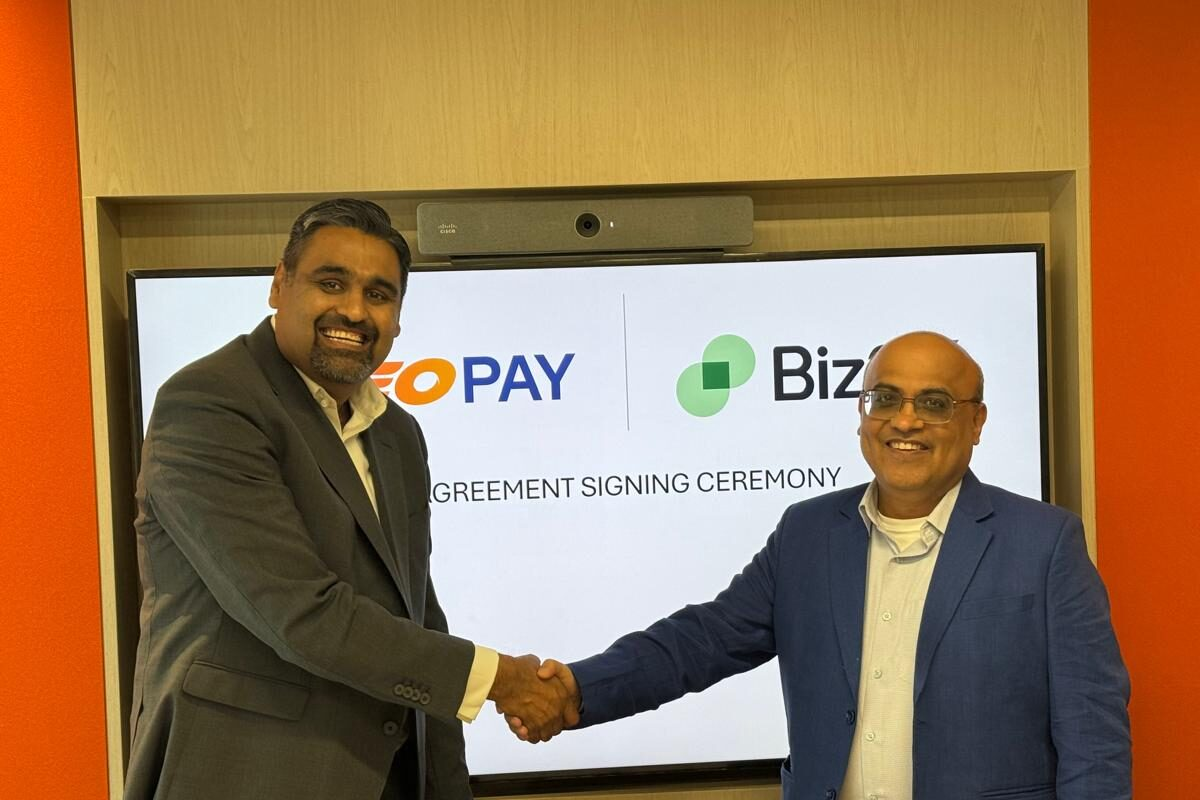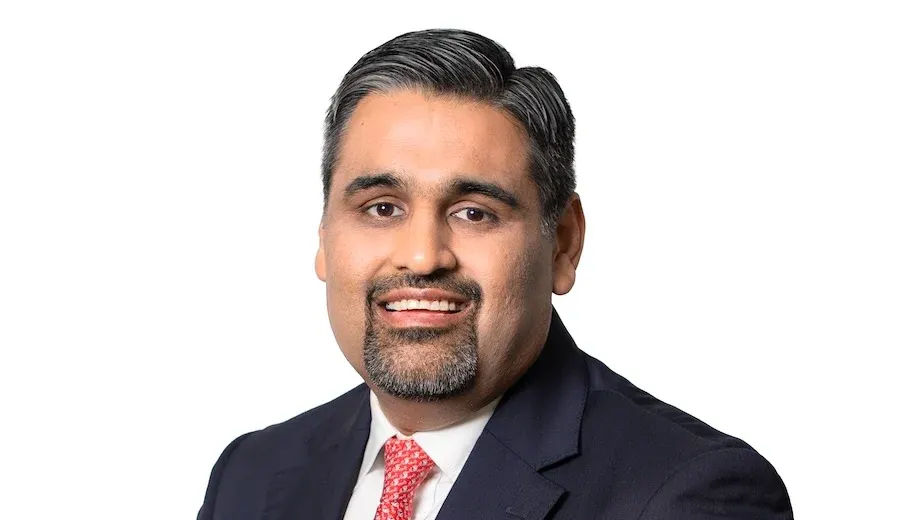
The CEO of NEOPAY shares why the next phase of the UAE’s digital payments story will be defined not by transaction volumes, but by turning transaction data into intelligence, working capital and growth for the SMEs
The UAE’s push towards a cashless economy is reshaping how businesses accept payments, access financing and understand their customers. As initiatives such as the Dubai Cashless Strategy accelerate adoption, the conversation among merchants is shifting from whether to go digital to how to extract genuine value from every transaction.
Few are better placed to read that shift than NEOPAY, the Mashreq-founded payments company that sits across the value chain, from POS terminals and e-commerce to fraud management and embedded finance. Gulf Business speaks to Vibhor Mundhada, CEO of NEOPAY, about why merchants want fewer, smarter tools rather than more of them; how AI and agentic systems are transforming everything from onboarding to fraud detection, including a multi-agent security architecture that has cut manual analysis by up to 80 per cent; and why the next phase of the UAE’s digital payments story will be defined not by transaction volumes, but by turning transaction data into intelligence, working capital and growth for the SMEs at the heart of the nation’s diversification agenda.
The UAE is accelerating its transition towards a cashless economy through initiatives such as the Dubai Cashless Strategy. From a merchant perspective, what are the biggest opportunities and challenges that businesses, particularly SMEs, face as digital payments become the dominant form of commerce?
The Dubai Cashless Strategy is not just a policy ambition; it is a commercial reality that merchants are navigating right now.
For SMEs, the opportunity is significant. Digital payments mean faster settlement, broader customer reach, and access to financial products that were previously out of reach. But the challenge is equally real. Most small businesses today are still managing fragmented systems, reconciling transactions across multiple platforms, and making decisions with incomplete information. That is where the friction lives.
What merchants are asking for is not more payment tools. They want fewer, smarter ones. Faster collections, clearer visibility into their transactions, and infrastructure that actually helps them compete and grow.
The real opportunity in the UAE’s cashless transition is not simply replacing cash. It is turning every transaction into useful intelligence for the merchant. That is the vision we’re driving at NEOPAY.
Artificial intelligence is becoming increasingly embedded in financial services. How is NEOPAY using AI and agentic AI to help merchants better understand customer behaviour, improve operational efficiency, and make more informed business decisions?
AI in payments has moved well past automation. The more interesting question now is how it changes the relationship between a merchant and their own business data.
We are embedding AI across the entire merchant journey. On the onboarding side, AI-assisted OCR and automated KYB checks reduce manual data entry, accelerate verification, and significantly shorten time-to-activation. That matters because every day a merchant spends navigating paperwork is a day they are not transacting. Once live, our conversational merchant portal allows businesses to interact with their own data through natural language rather than manually pulling reports. A merchant can ask which payment channels are growing fastest or how weekend sales compare to weekdays, and get a structured, accurate answer in seconds.
But the more consequential shift is what comes next. The global payments industry is already moving toward agentic AI, where systems do not just respond to queries but proactively surface insights, flag anomalies, and make recommendations without waiting to be asked. Visa and Mastercard both launched dedicated agentic commerce frameworks in 2025 and 2026 precisely because the industry recognises that the next frontier is not faster payments; it is smarter ones.
Our ambition is to bring that capability to merchants at every scale. The safeguards matter too. AI adoption in financial services has to sit within secure, compliant environments with human oversight. Automation should build trust, not introduce new points of failure.
With geopolitical uncertainty and increasingly sophisticated fraud threats, payment security has become a major concern for businesses. How are technologies such as AI helping payment providers strengthen fraud detection, reduce chargebacks, and maintain trust in digital transactions?
Trust is the foundation of every digital payment. And as transaction volumes grow and fraud becomes more sophisticated, AI is no longer optional infrastructure. It is the operating layer that keeps that trust intact.
We have built a multi-agent AI architecture inside our security operations. Rather than relying on a single system to flag threats, a network of specialised AI agents works across the full security lifecycle, from threat triage and false positive reduction to investigation, response orchestration, and continuous optimisation. The results are measurable: up to 70-80 per cent reduction in manual security analysis, investigations completed in seconds rather than minutes, and hundreds of analyst hours saved every month. Our security teams now spend less time gathering information and more time on higher-value work like threat hunting and risk reduction.
Security cannot come at the expense of speed. Merchants today accept payments across terminals, e-commerce, mobile wallets, QR codes, and payment links. That breadth creates more data points and more complexity. AI is what makes it possible to monitor all of it consistently, in real time, without adding friction for the genuine customer. The strongest payment ecosystems protect merchants and customers while keeping the experience seamless.
As the UAE’s digital economy grows, security is not just a compliance requirement. It is a competitive differentiator. Merchants choose platforms they trust. Our job is to make sure that trust is earned and maintained at every transaction.
NEOPAY sits across the payments value chain, from POS and e-commerce to fraud management and embedded finance. How are merchant expectations evolving, and what services beyond payment acceptance are becoming critical for businesses looking to scale?
Merchant expectations have shifted significantly. Businesses today expect an integrated solution that handles the full operational picture, not a collection of tools from separate providers.
Payment acceptance remains the foundation, but what merchants are asking for beyond that has grown considerably. Faster onboarding, real-time reporting, flexible settlement, fraud protection, and insights that help them understand their own business are now givens. The merchants who are scaling are the ones who have found solutions that work for them, not platforms they have to work around.
We are building a connected merchant ecosystem that spans in-store, e-commerce, payment links, alternate payment methods, QR payments and BNPL. Partnerships around solutions like Aani and international payment acceptance like Alipay+, WeChat Pay, NPCI-UPI, PayPal and more expand merchant choice and reach. But the more meaningful evolution is in the value-added layer.
Merchants increasingly want analytics that surface actionable patterns, not just transaction records. And increasingly, they need access to embedded financing, working capital and growth tools connected directly to their transaction activity, available at the moment they need it rather than through a separate, lengthy application process. That is where embedded lending becomes a genuine differentiator, not a feature but a fundamental part of how a merchant scales.
The merchants who will grow fastest in this market are the ones with the clearest view of their business and the right financial tools available at the right moment.
What do transaction trends tell you about the pace of digital payment adoption in the UAE, and are there any emerging sectors or merchant segments that are growing faster than expected?
Through our work supporting the Dubai Cashless Strategy, we see digital payment adoption accelerating across the UAE in real time. The shift is not just in volume. It is in behaviour. Consumers now expect seamless payment experiences whether they are buying in-store, online, or through a mobile device, and businesses that cannot meet that expectation are losing ground to those that can.
The growth is not concentrated in one sector. Retail, hospitality, services, and digitally enabled businesses are all moving in the same direction, with digital payments and real-time settlement becoming priorities rather than nice-to-haves.
What the data tells us is that the next phase of growth will not be driven simply by higher volumes. It will come from helping merchants use their transaction data intelligently, to understand their customers better, spot opportunities earlier, and make decisions with more confidence. Adoption is no longer the challenge. Depth of use is.
The UAE has positioned SME growth as a key pillar of economic diversification. Given your work, what are the biggest barriers SMEs still face in accessing digital payment infrastructure, financing and growth opportunities, and how can the industry help address them?
SMEs are the backbone of this economy and a central pillar of the We the UAE 2031 vision. But many still face obstacles that have less to do with ambition and more to do with access. The most persistent barrier is fragmentation. Getting set up, accepting payments across multiple channels, applying for financing, and making sense of business performance still requires dealing with multiple institutions and repeating the same process multiple times. For a small business owner, that is time and energy they do not have.
Access to financing is a related challenge. Traditional credit assessments are built around historic financial statements, which puts newer or smaller businesses at a disadvantage regardless of how well they are actually trading. The data to make a better lending decision exists; it lives in their transaction activity, but the infrastructure to use it has not always been in place.
We are working to change that on both fronts. The first is our SME in a box proposition, a single solution that takes a business from inventory management through to a complete digital payments setup, removing the operational complexity that slows small businesses down from day one. The second is AI-powered embedded lending, where transaction data flowing through our platform connects SMEs directly to the right lending partners, enabling faster, smarter credit decisions based on actual business performance rather than paperwork.
The broader industry has a role to play too. Greater collaboration between payment providers, fintechs, regulators, and ecosystem partners is what turns good infrastructure into genuine opportunity for the businesses that need it most.